

Travel Highlights
On the Road in Chungcheongnam-do
- Date09/13/2021
- Hit6178
 Share
Share


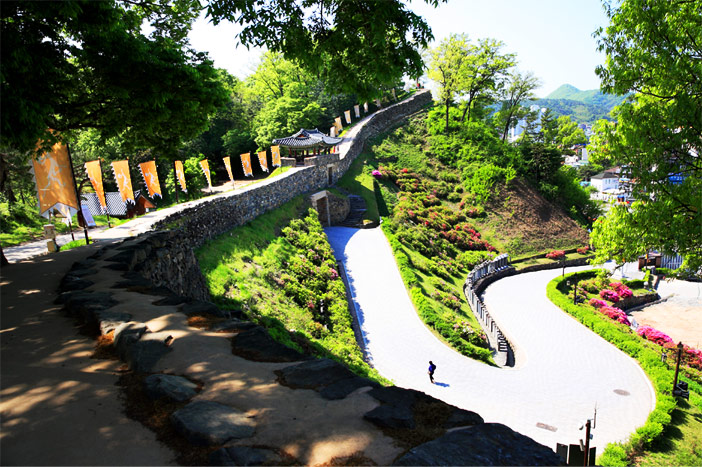
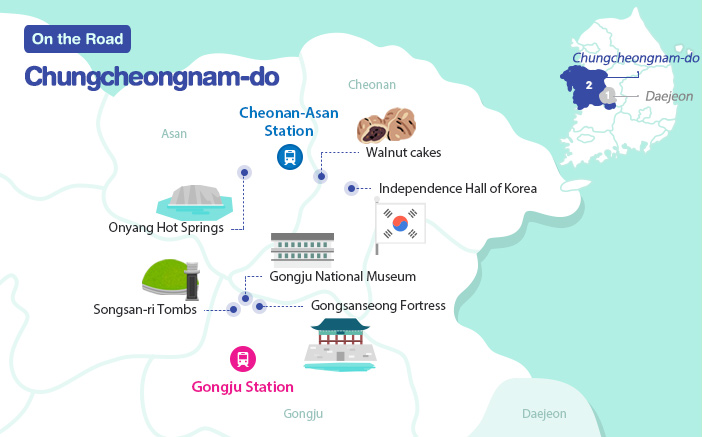
Chungcheongnam-do is most famous for its important role as the center of the Baekje kingdom during the Three Kingdoms Period. The city of Gongju in particular has many natural attractions perfect for feeling this history while walking, such as the Tomb of King Muryeong and Royal Tombs, or Gongsanseong Fortress. For more of Korea’s modern history, Cheonan is the place to be, home to popular street snacks and The Independence Hall of Korea. Whichever era you are interested in, you can find it in Chungcheongnam-do!
Tip) Learning more on the Cheonan City Tour
Cheonan City Tour Bus offers various courses to the area’s most popular attractions. Visitors can enjoy festivals, making cheese, picking grapes, and more.
- ☞ Courses: Cheonan-Asan course (Tuesday), East & Southwest course (Thursday), Family course (Saturday), Patriotic course (Sunday)
* Courses vary by day; refer to the website for details
☞ Operating period: March 2 – November 30, 2019 / Tuesday, Thursday, Saturday, Sunday
☞ Boarding point: Cheonan Bus Terminal 10:00 / Cheonan Station 10:00
☞ Fare: Adults 4,000 won / Teenagers 3,000 won / Children 2,000 won
* Admission to attractions, experience programs, meals, etc. not included
* Same-day on-site ticket purchase available; cash only
* Canceled if minimum number of passengers (10) is not met
☞ Inquiries: +82-41-521-2038 (Korean only), +82-41-569-0041 (Korean only)
☞ Website: www.cheonan.go.kr (Korean only)
Major transportation centers
Gongju Station
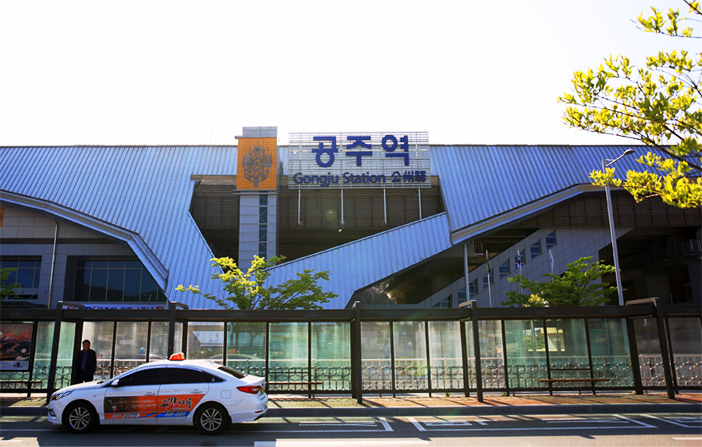
Gongju Station was opened on April 2, 2015, with added service of the SRT train beginning December 9, 2016. The station is in a central location, with city buses operating to the nearby cities of Gongju, Buyeo, and Nonsan. There is also a circular city tour bus operating between Gongju and Sejong. If you’re looking to start sightseeing right away, we recommend taking a taxi into the city.
- Gongju Station
- ☞ Address: 100, Saebit-ro, Gongju-si, Chungcheongnam-do (충청남도 공주시 이인면 새빛로 100)
☞ Amenities: Food & beverage sales, convenience store, parking lot, etc.
☞ Inquiries: +82-1544-7788 (Korean, English)
Cheonan-Asan Station
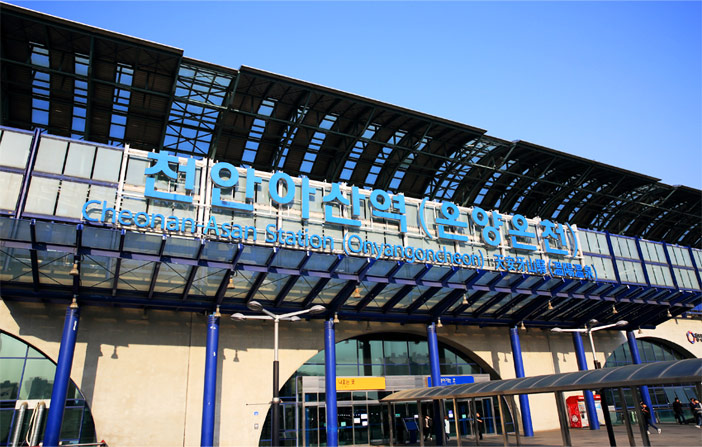
Cheonan-Asan Station services KTX and SRT trains on the Gyeongbu Line, as well as providing quick transfers to trains running through Asan Station on the Janghang Line. There are many shopping centers around the station, including Galleria Department Store and Moda Outlets. There are city buses, taxis, and shuttle buses available for visitors looking to venture further from the station
- Cheonan-Asan Station
- ☞ Address: 100, Hoemang-ro, Asan-si, Chungcheongnam-do (충청남도 아산시 배방읍 희망로 100)
☞ Amenities: Lost-and-found, food & beverage sales, lockers, nursing room, etc.
☞ Inquiries: +82-1544-7788 (Korean, English)
Recommended attractions in Gongju
Tomb of King Muryeong and Royal Tombs
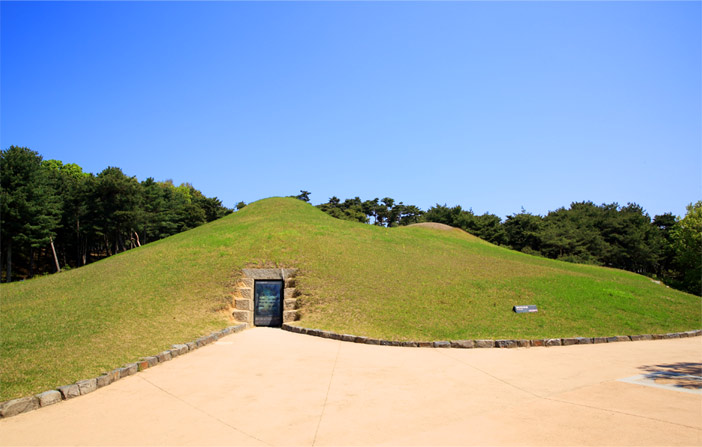
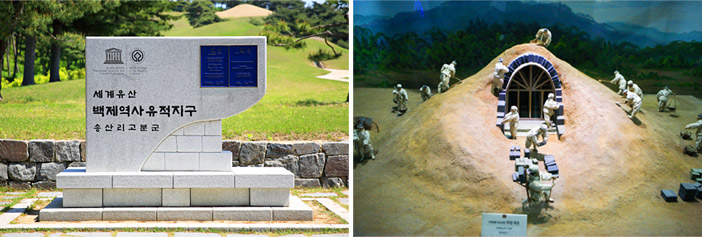
The Tomb of King Muryeong and Royal Tombs were accidentally unearthed in 1971 during a construction project. Since then, the tombs have been meticulously restored to their original form, when they were first created over 1,500 years ago for the kings and royal family members of the Baekje kingdom. They provide wonderful insight into the creativity and craftsmanship that flourished during the Baekje period. The most impressive tomb belonged to King Muryeong and his wife. While entrance into the real tombs is prohibited, reconstructions of King Muryeong’s tomb along with tombs 5 & 6 have been created for visitors to fully appreciate them. Unfortunately, the reconstructions are currently closed and will reopen August 1.
- Tomb of King Muryeong and Royal Tombs
- ☞ Address: 37-2, Wangneung-ro, Gongju-si, Chungcheongnam-do (충청남도 공주시 왕릉로 37-2)
☞ Directions: From Gongju Station, 1 hr 20 min by city bus / 30 min by taxi
☞ Operating hours: 09:00-18:00, open all year round
☞ Admission: Adults 1,500 won / Teenagers 1,000 won / Children 700 won
☞ Inquiries: +82-41-856-3151 (Korean only)
Gongsanseong Fortress
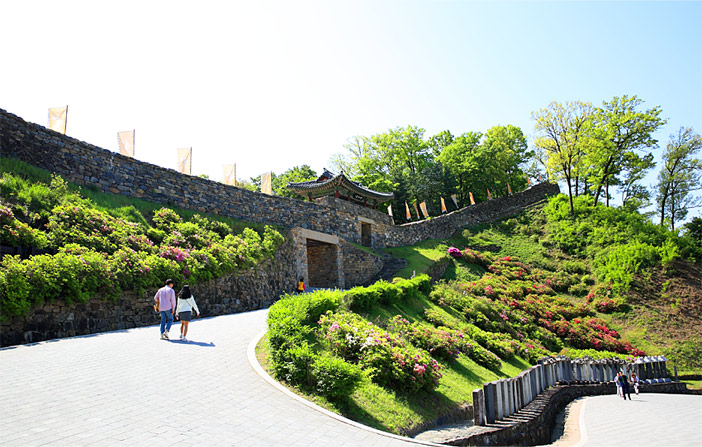
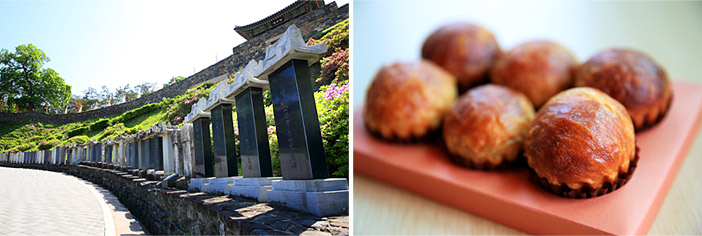
Gongsanseong Fortress was the site of the royal residence during the Baekje era. During the Baekje Culture Festival, the fortress can be reached crossing the Geumggang River via floating bridge. Outside of the festival period, visitors must pass through the main gate. Once inside, visitors can choose to explore the interior or walk along the ramparts. The fortress ramparts provide outstanding views of the surrounding city. Walking the entire 2,660 meters would take around two to three hours, with steep inclines at some points. Afterwards, be sure to stop by Gongsanseong Baengmagoeul Food Street, located directly in front of the fortress’s main gate. We recommend stopping in at Bammaeul Bakery, serving sweet pastries using bam (chestnut), one of the local specialties.
- Gongsanseong Fortress
- ☞ Address: 280, Ungjin-ro, Gongju-si, Chungcheongnam-do (충청남도 공주시 웅진로 280)
☞ Directions: From Gongju Station, 1 hr 10 min by city bus / 30 min by taxi
☞ Operating hours: 09:00-18:00, open all year round
☞ Admission: Adults 1,200 won / Teenagers 800 won / Children 600 won
☞ Inquiries: +82-41-840-2266 (Korean, English, Japanese) - Bammaeul Bakery
- ☞ Address: 5-13, Baengmigoeul-gil, Gongju-si, Chungcheongnam-do (충청남도 공주시 백미고을길 5-13)
☞ Operating hours: 09:00-21:00, open all year round
☞ Signature menus: Chestnut pie (6pc set) 12,000 won / chestnut pie (10pc set) 19,000 won / chestnut éclair 3,000 won
☞ Inquiries: +82-41-853-3489 (Korean only)
☞ Website: marron.edenstore.co.kr (Korean only)
Gongju National Museum
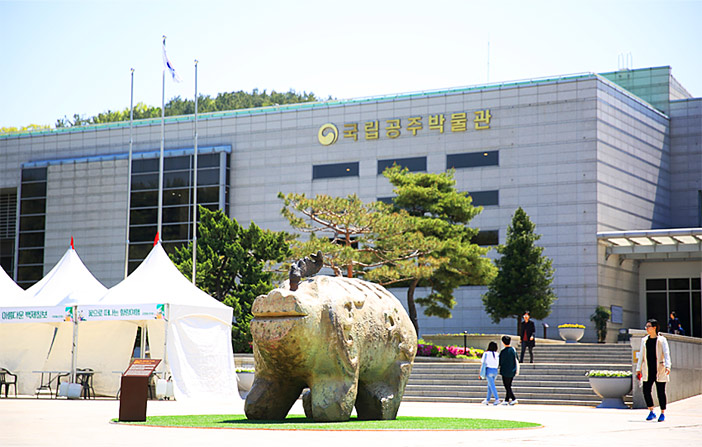
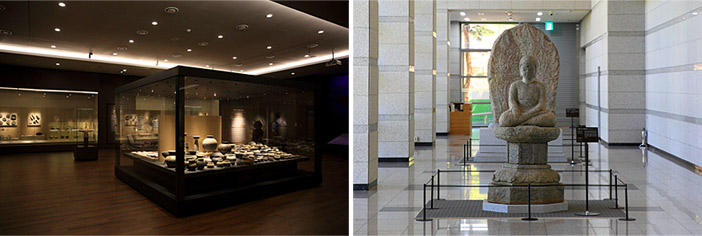
Gongju National Museum displays artifacts and historical information regarding the Gongju area from the prehistoric era to the unified Silla era. However, the museum mostly focuses on the Baekje kingdom during the time when Gongju was the capital city. The outdoors exhibition space displays Buddhist relics such as a seated stone statue of Buddha, uncovered from important Buddhist temples built during the Baekje era, including Daetongsaji Temple Site and Seohyeolsaji Temple Site.
- Gongju National Museum
- ☞ Address: 34, Gwangwangdangji-gil, Gongju-si, Chungcheongnam-do (충청남도 공주시 관광단지길 34)
☞ Directions: From Gongju Station, 1 hr 20 min by city bus / 30 min by taxi
☞ Operating hours: Tuesday-Friday 09:00-18:00 / Saturday-Sunday & public holidays 09:00-19:00
* Open at 10:00 October-March
* Extended hours (09:00-21:00) every Saturday April-September
* Closed Mondays
☞ Inquiries: +82-41-850-6300 (Korean only)
☞ Website: gongju.museum.go.kr (Korean, English, Japanese, Chinese)
Recommended attractions in Cheonan
Cheonan walnut cakes
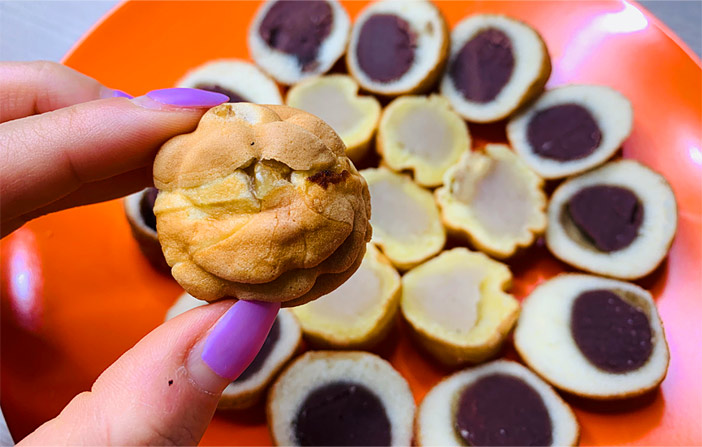
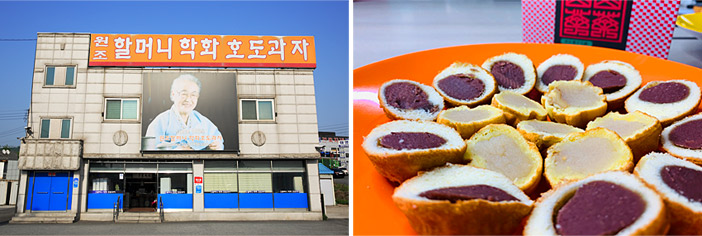
Cheonan is the home of hodu gwaja (walnut cakes), a popular treat at rest areas throughout the nation. The cakes are made of a wheat batter with chopped walnuts around a sweet red bean filling. While you can get them anywhere in the country, nowhere can measure up to the original, sold at Hakwa Hodo Gwaja located near Cheonan Station. The shop was opened in 1934 by Grandmother Sim Bok-sun, and her husband Cho Gwi-geum. Since their passing, the shop has been passed down each generation, with their grandchild now running the place.
- Hakwa Hodo Gwaja
- ☞ Address: 590, Cheonan-daero, Dongnam-gu, Cheonan-si, Chungcheongnam-do (충청남도 천안시 동남구 천안대로 590)
☞ Directions: From Cheonan-Asan Station, 40 min by city bus / 20 min by taxi
☞ Operating hours: 07:00-21:00, open all year round
☞ Inquiries: +82-1599-3370 (Korean only)
☞ Website: www.hodo1934.com (Korean only)
The Independence Hall of Korea
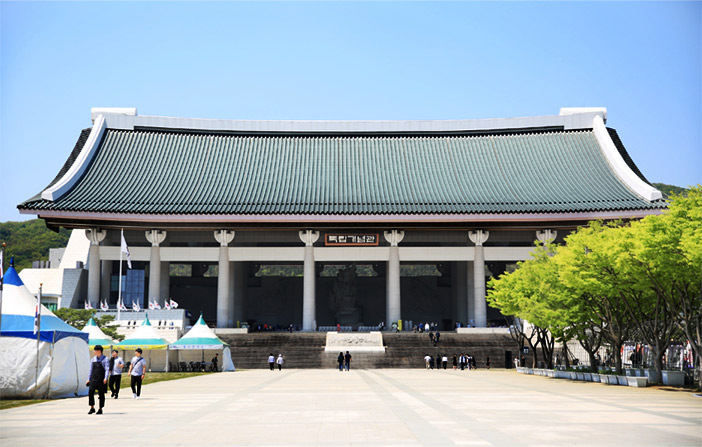

The Independence Hall of Korea is truly a creation of the people, opening on August 15, 1987 due to the funding from citizens. The museum celebrates the resilience of the Korean people to not only overcome hardships but to succeed! Visitors can easily put themselves in the shoes of Koreans living in an occupied country, searching for ways to keep their culture while striving for independence. The hall is so well designed that even foreign visitors will feel a sense of pride in the accomplishments of Korea.
- The Independence Hall of Korea
- ☞ Address: 95, Sambang-ro, Dongnam-gu, Cheonan-si, Chungcheongnam-do (충청남도 천안시 동남구 목천읍 삼방로 95)
☞ Directions: From Cheonan-Asan Station, 1 hr 10 min by city bus / 25 min by taxi
☞ Operating hours: March-October 09:30-18:00 / November-February 09:30-17:00
* Last admission 1 hour before closing
* Closed Mondays
☞ Admission: Free (Separate fees apply to tram)
☞ Inquiries: +82-41-560-0500 (Korean only)
☞ Website: www.i815.or.kr (Korean, English, Japanese, Chinese)
Onyang Hot Springs
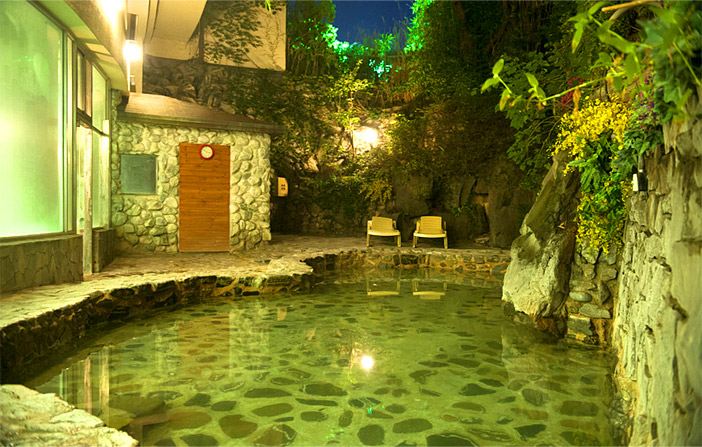
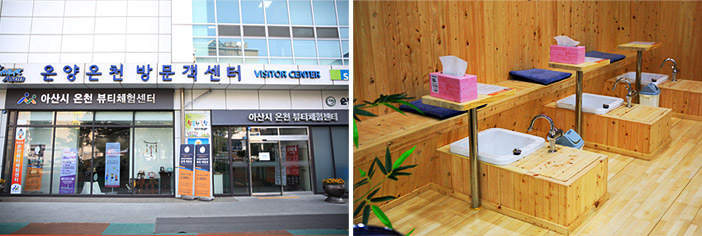
The best way to shake off travel fatigue is by getting some downtime at a spa! Asan is perfect for doing just this, with plenty of spas and jjimjilbangs (Korean saunas) in the Onyang Hot Springs area. Kings of the Joseon dynasty would make trips out of the capital just to bathe in the hot springs. The waters are known for improving not only skin but also other health problems such as digestive issues and anemia. If you don’t have time to relax at a spa but would still like to enjoy the benefits, stop by the Asan Hot Springs Beauty Center at Onyangoncheon Station. For just 3,000 won, you can enjoy a relaxing foot bath. Choose the essential oil you prefer among lemon, applemint, lavender, and chrysanthemum. Other programs at the center include making scented candles or keyrings.
- Onyang Hot Springs
- ☞ Address: Area of Oncheon-dong, Asan-si, Chungcheongnam-do (충청남도 아산시 온천동)
☞ Directions: From Cheonan-Asan Station, 30 min by city bus / 25 min by taxi - Asan Hot Springs Beauty Center
- ☞ Address: 1496, Oncheon-daero, Asan-si, Chungcheongnam-do (충청남도 아산시 온천대로 1496)
☞ Directions: Located within Onyangoncheon Station, 1F
☞ Operating hours: 10:30-17:00, open all year round
☞ Inquiries: +82-41-544-2822 (Korean only)
More info
☞ 1330 Korea Travel Hotline: +82-2-1330 (Korean, English, Japanese, Chinese, Russian, Vietnamese, Thai, Malay)
* This column was last updated in May 2019, and therefore information may differ from what is presented here. We advise you to check details before visiting.